“I got complacent. Don’t ever let that happen to you.”
These were the words of advice offered to me by a patient when reflecting on his second encounter with cancer. The first was a lymphoma diagnosis 10 years prior, and recent scans showed a reappearance of malignancy along the spine.
We talked awhile about the emotional and psychological fallout from a cancer diagnosis before I shared my perspective following my 2015 diagnosis. Hit out of nowhere in my early 30s, I had to find a mental middle ground, acknowledging and preparing for the worst possible outcome while maintaining a positive attitude that reinforced healing.
Many in this situation think hope lives at the crossroads of these two states, but when I contemplate the notion of hope, I don’t feel particularly empowered.

Hope feels anxious to me, like a patient waiting by the phone for the oncologist to call with test results. It is akin to being tied by two ropes pulling in opposite directions and thus going nowhere.
On one side is total acceptance of what the future may hold. Peacefully residing in this state, nothing is taken for granted and it is possible to be healed (on an emotional and spiritual level) even without hope of a cure.
On the other side is a state of self-empowerment that drives change and the will to maintain it over time.
In between these two perspectives, but preventing full access to either, is hope. Cutting the ropes of what you hope for allows you to fully and simultaneously embrace both states of being: acceptance and self-empowerment.
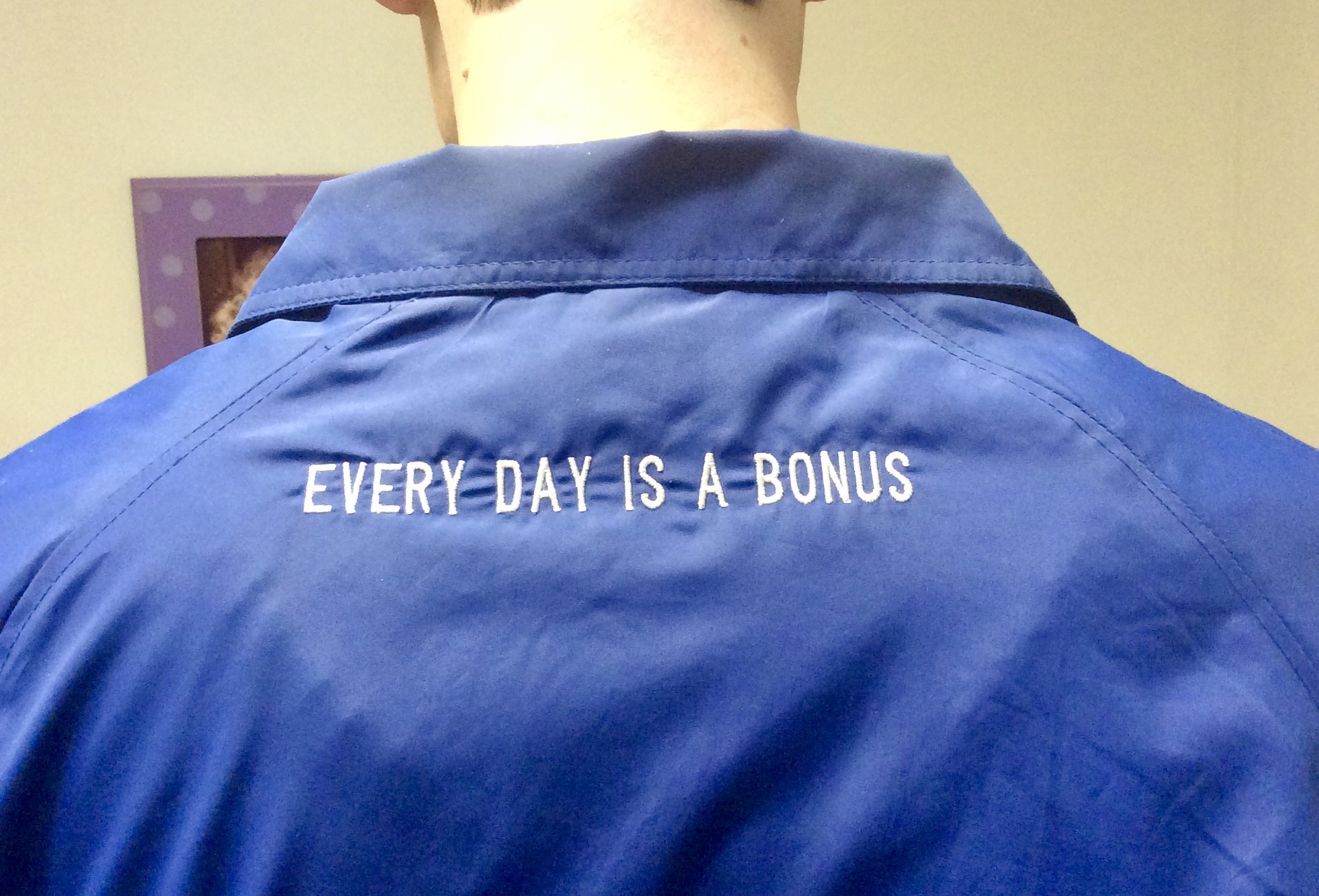
The conversation with my patient took this philosophical turn when I shared my mindset living with cancer. Since my diagnosis, I consider myself to be on borrowed time, cherishing every moment of life that is given. From this place, I make very different decisions than someone on a bridge of hope, dangling over a deep ravine of fear.

My patient then confided that he used to have a similar attitude in regard to his mortality, but over the years in remission he lost that razor’s-edge mindset, resulting in his admission: “I got complacent. Don’t ever let that happen to you.”
Cancer diagnosis or not, we all have to balance the paradox of cultivating health while remaining detached from the outcome. There are matters in life beyond our control, but much is mutable. The most liberating decision is to choose freedom over fear, cultivating peace, regardless of circumstances.