Vegetables, especially green leafy ones, are vital for overall health. Their benefits extend to critical bodily functions like liver detoxification and hormone regulation. Here’s an evidence-based overview of how these benefits unfold.
Hormonal Balance: Green leafy vegetables play a significant role in balancing and regulating human hormones. These vegetables are rich in micronutrients essential for the production of enzymes and hormones, thereby influencing growth, development, and the functioning of the immune and reproductive systems1.
Liver Health: Vegetables, rich in fiber and antioxidants, can significantly reduce liver enzymes, indicating improved liver function. Higher intake of vegetables has been linked to lower levels of liver enzymes like ALT, suggesting a protective effect against liver damage2.
Detoxification Support: Certain foods have shown potential in supporting detoxification processes in the liver. For example, compounds in vegetables like broccoli can influence liver health by affecting pathways related to glutathione metabolism3.
Reduction of Inflammation: Diets rich in fruits and vegetables, including green leafy vegetables, help reduce inflammation, crucial for maintaining liver health and hormonal balance4.
How to Test Your Antioxidant Status
Are you getting enough greens in your diet? Testing 8-OHdG (opens in new tab) is like having a reliable health detective for your body’s cells. It’s a marker that helps us understand how much oxidative damage—the kind of stress that can harm our cells—is happening in our bodies. When we have too many harmful molecules (like free radicals) and not enough antioxidants to neutralize them, it causes oxidative stress. 8-OHdG measures the outcome of this battle: the higher its levels, the more damage is being done. So, by checking 8-OHdG levels, we get a clear picture of whether our bodies have enough antioxidants to protect our cells from damage.
The Powerhouse Plants to Include in Your Diet
While there’s a wide array of superfoods available, those grown locally and organically often stand out in terms of quality and nutritional value. Local, organic farming ensures that the plants are nurtured in a more natural, chemical-free environment, which can lead to a higher concentration of beneficial nutrients.
- Alfalfa sprouts are beneficial for cholesterol management and overall health due to their content of saponins and other nutrients5.
- Barley grass is an excellent functional food, rich in flavonoids, helping eliminate toxins from cells6.
- Beets, including their leaves, are beneficial for lowering blood pressure and improving athletic performance due to their high nitrate and pigment content7.
- Brussels sprouts may reduce the risk of chronic diseases like cancer and heart disease, owing to their rich nutrient and antioxidant content8.
- Buckwheat contributes to heart health and diabetes management, being a good source of protein, dietary fiber, B vitamins, and several minerals9.
- Kale offers extensive health benefits, particularly for heart disease prevention, due to its high content of vitamins, minerals, and antioxidants10.
- Pea shoots, rich in Vitamin C, offer antioxidant properties and support the immune system11.
- Swiss chard is beneficial for bone health and provides antioxidants, being rich in magnesium, iron, and various vitamins12.
- Turnip greens offer benefits like cancer prevention and improved bone health, being high in vitamins, calcium, and antioxidants13.
The Easy Way to Get More Greens in Your Diet
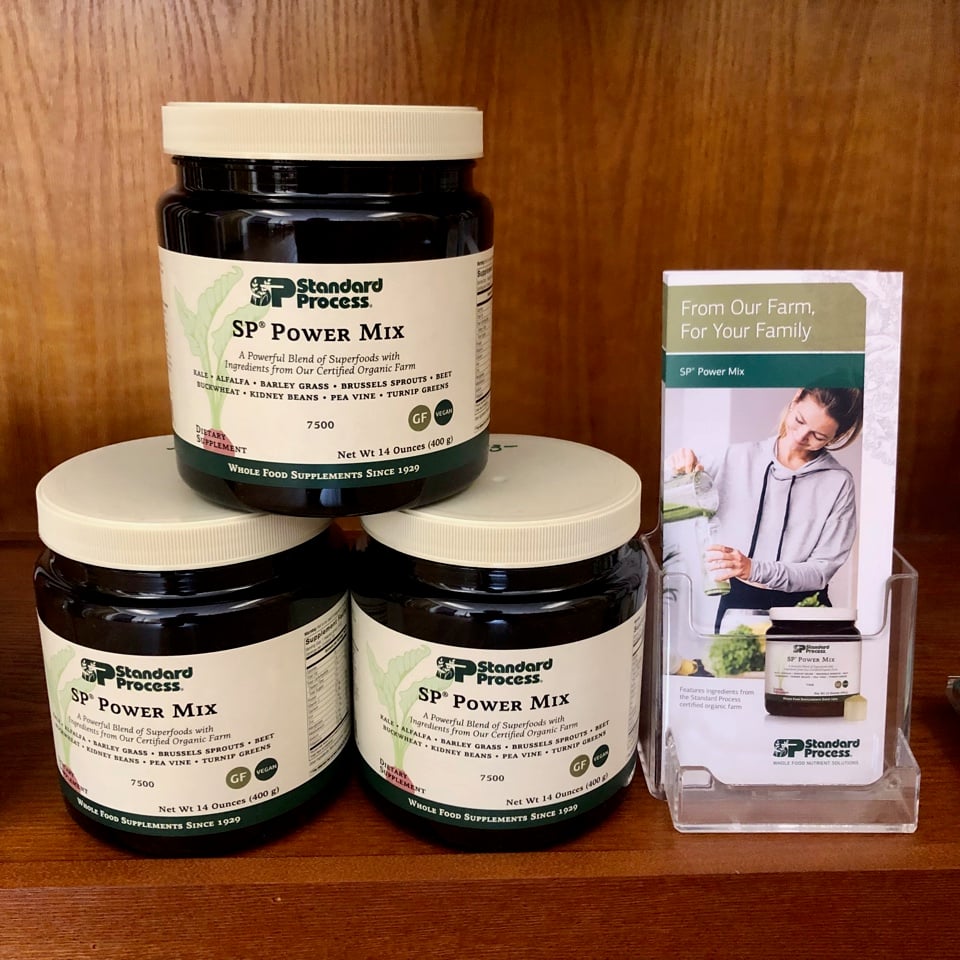
Are you eating these greens on a regular basis? If the answer is no, there is an easier way. All of the plants listed above are crops organically grown on the Standard Process® farm and compose their flagship green powder supplement, SP® Power Mix (opens in new tab).
These ingredients are chosen for their nutritional profiles and are part of the superfood blend in the supplement. Its formulation addresses micronutrient inadequacies common in modern diets and the low nutrient concentrations in many contemporary fruits and vegetables. SP Power Mix aims to balance health and convenience, offering a nutritious option for supplementing daily fruit and vegetable intake.
Conclusion
The consumption of vegetables, particularly green leafy ones, plays a significant role in promoting liver health and maintaining hormonal balance. Their rich nutrient profile supports crucial bodily functions, making them an essential part of a healthy diet. If your including these plants in your diet, the next best thing is to supplement them as a green powder made from crops grown organically and processed locally to ensure the highest concentration and bioavailability of nutrients.
References
1. Ekweagwu, E., Agwu, A., & Madukwe, E. (2008). The role of micronutrients in child health: A review of the literature. African Journal of Biotechnology, 7, 3804-3810. https://doi.org/10.4314/AJB.V7I21.59444 (opens in new tab).
2. Mollahosseini, M., Daneshzad, E., Rahimi, M., Yekaninejad, M., Maghbooli, Z., & Mirzaei, K. (2017). The Association between Fruit and Vegetable Intake and Liver Enzymes (Aspartate and Alanine Transaminases) in Tehran, Iran. Ethiopian Journal of Health Sciences, 27, 401 – 410. https://doi.org/10.4314/EJHS.V27I4.11 (opens in new tab).
3. Eve, A., Liu, X., Wang, Y., Miller, M., Jeffery, E., & Madak-Erdogan, Z. (2020). Biomarkers of Broccoli Consumption: Implications for Glutathione Metabolism and Liver Health. Nutrients, 12. https://doi.org/10.3390/nu12092514 (opens in new tab).
4. Johnson, K. (2015). The missing links for a productive work/life balance. Journal of Nutritional Health & Food Engineering, 2. https://doi.org/10.15406/jnhfe.2015.02.00055 (opens in new tab).
5. Soufan, W., Okla, M., Salamatullah, A., Hayat, K., Abdel-Maksoud, M., & Al-Amri, S. (2021). Seasonal variation in yield, nutritive value, and antioxidant capacity of leaves of alfalfa plants grown in arid climate of Saudi Arabia. Chilean journal of agricultural research. https://doi.org/10.4067/S0718-58392021000200182 (opens in new tab).
6. Zhou, Y., & Yang, T. (2018). Preventive and Therapeutic Role of Functional Ingredients of Barley Grass for Chronic Diseases in Human Beings. Oxidative Medicine and Cellular Longevity, 2018. https://doi.org/10.1155/2018/3232080 (opens in new tab).
7. Clifford, T., Howatson, G., West, D. J., & Stevenson, E. J. (2015). The potential benefits of red beetroot supplementation in health and disease. Nutrients, 7(4), 2801–2822. https://doi.org/10.3390/nu7042801 (opens in new tab).
8. Podsędek, A. (2007). Natural antioxidants and antioxidant capacity of Brassica vegetables: A review. LWT – Food Science and Technology, 40(1), 1-11. https://doi.org/10.1016/j.lwt.2005.07.023 (opens in new tab)
9. Skrabanja, V., Liljeberg Elmståhl, H. G., Kreft, I., & Björck, I. M. (2001). Nutritional properties of starch in buckwheat products: Studies in vitro and in vivo. Journal of Agricultural and Food Chemistry, 49(1), 490-496. https://doi.org/10.1021/jf0008386 (opens in new tab).
10. Ligor, M., Trziszka, T., & Buszewski, B. (2013). Study of Antioxidant Activity of Biologically Active Compounds Isolated from Green Vegetables by Coupled Analytical Techniques. Food Analytical Methods, 6, 630-636. https://doi.org/10.1007/s12161-012-9367-9 (opens in new tab).
11. Turkmen, N., Sarı, F., & Velioglu, Y. (2005). The effect of cooking methods on total phenolics and antioxidant activity of selected green vegetables. Food Chemistry, 93, 713-718. https://doi.org/10.1016/J.FOODCHEM.2004.12.038 (opens in new tab)
12. Mzoughi, Z., Chahdoura, H., Chakroun, Y., Cámara, M., Fernández-Ruíz, V., Morales, P., Mosbah, H., Flamini, G., Snoussi, M., & Majdoub, H. (2019). Wild edible Swiss chard leaves (Beta vulgaris L. var. cicla): Nutritional, phytochemical composition and biological activities.. Food research international, 119, 612-621 . https://doi.org/10.1016/j.foodres.2018.10.039 (opens in new tab).
13.Javed, A., Ahmad, A., Nouman, M., Hameed, A., Tahir, A., & Shabbir, U. (2019). Turnip (Brassica Rapus L.): a natural health tonic. Brazilian Journal of Food Technology. https://doi.org/10.1590/1981-6723.25318 (opens in new tab).