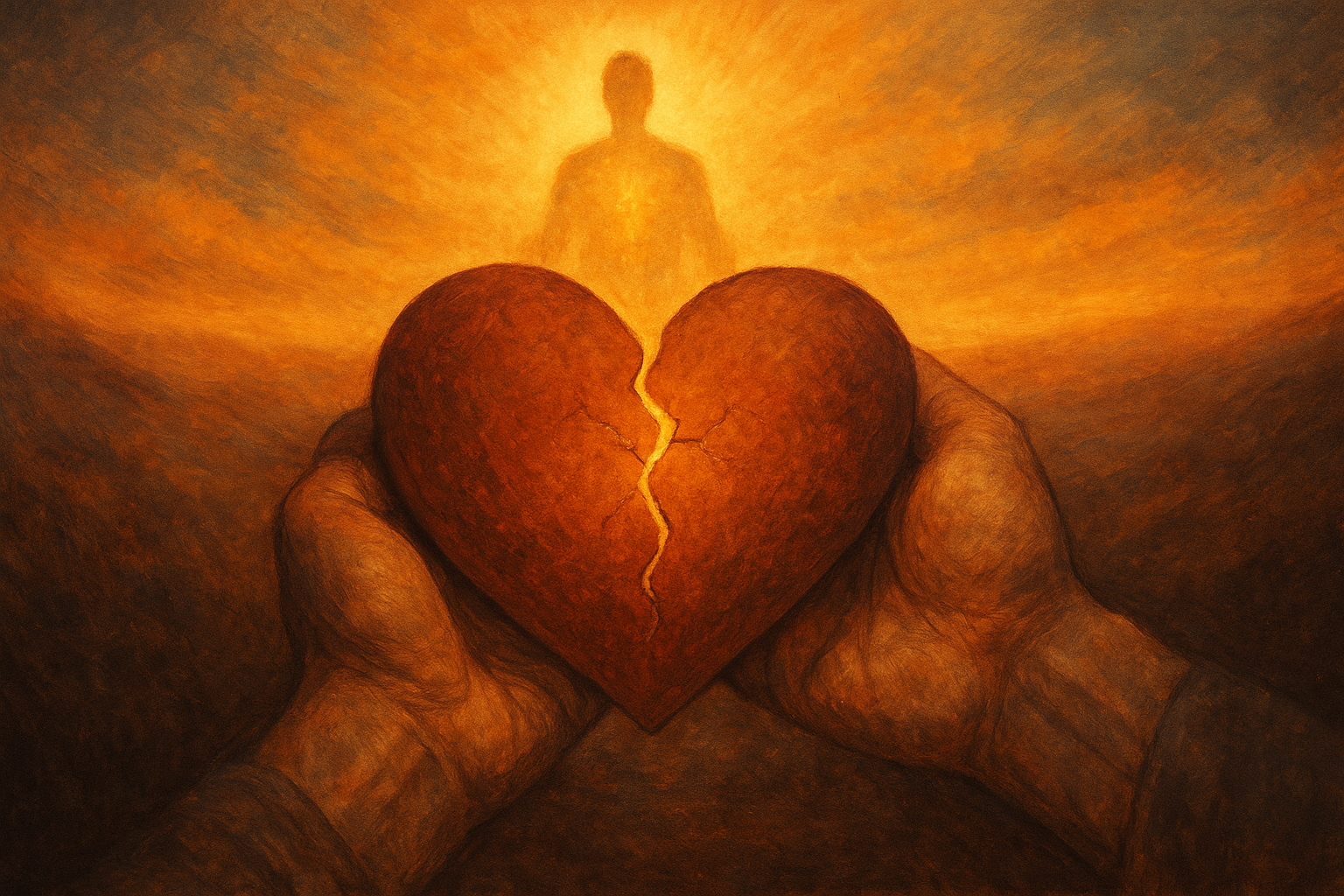
Hopefully it is evident by this stage of the series that spiritual healing is a physiological human capacity, that stress and trauma plant the seed of imbalance, and that spirit as consciousness is the driver for healing on a subtle level.
Have you ever heard of Takotsubo syndrome? First described in Japan and often called “broken heart syndrome,” it is a temporary weakening of the heart muscle that usually happens after a major emotional or physical shock—grief, conflict, illness—most often in older women. It mimics a heart attack, with sudden chest pain or shortness of breath, and early tests can look similar. Yet unlike a heart attack, the heart’s arteries aren’t blocked; instead, a flood of stress hormones briefly stuns the heart.
This is just one more example of how the emotional content of our experience can give rise to profound physiological changes, and acutely so in this case. Still, it is the history of stress and trauma predisposing chronic, recalcitrant health challenges that stands to benefit most from a holistic paradigm of medicine—one that places spirit at the center of intervention.
This doesn’t mean we discard materialism and expect everyone to heal their woes by thought alone, nor can we expect procedural and pharmaceutical medicine to provide all the answers. Being a grounded and well-informed practitioner of holistic medicine means knowing how to combine the best of physical medicine with spiritual insights.
It is a mistake (and a personal pet peeve of mine) when New Age-inclined practitioners are quick to point to some karmic or spiritual cause for even the smallest problem, stating, unequivocally, that all dis-ease is rooted in spiritual sickness. My position, as stated from the beginning of this series, is that all illness stems from an imbalance with nature and natural rhythms. That doesn’t imply the chain of causality always moves from subtle/spiritual to gross/physical. Stubbing your toe is generally not an indication that you’ve encountered an evil spirit or are paying off karmic debt. Sometimes you just stub your toe, and the only spiritual message is to be more mindful of your surroundings.
In a similar vein, documenting frank nutrient deficiencies requires a change in diet and/or supplementation. Low vitamin D does not suggest divine retribution for your sins, but it is a clear indicator of inadequate sun exposure—an imbalance with nature and natural rhythms. We need to fuse the worlds of spirit and matter and realize that eating nutrient-dense foods grown in living soil and standing in the light of the sun are, in themselves, spiritual acts.
Staying grounded in the physical causes of illness is essential because projecting spiritual illness onto every malady constitutes a form of spiritual bypassing. This occurs when someone uses spiritual ideas or practices—like meditation, positivity, or “everything happens for a reason”—to avoid dealing with difficult emotions, trauma, or real-life problems. Instead of facing pain or challenges directly, spirituality is used as a way to escape or cover them up. While this may feel comforting in the short term, it often prevents deeper healing from taking place.

It is also important to remember that not all physical and mental discomfort is curable, and that acceptance may be the only healing available. Recall from an earlier post the image of Jesus after the resurrection—whole, yet with his light body still bearing the wounds of crucifixion. This communicates a seminal teaching that bears repeating: the wound is the way. Suffering can indeed be a path to spiritual truth. I believe we live in a benevolent universe where Divinity does not cause our suffering but instead makes use of it, allowing it to guide us toward a deeper union with Spirit.
To walk this path wisely is to honor both the seen and the unseen, matter and spirit, pain and transcendence. True spiritual medicine invites us to serve life rather than control it, to hold our wounds as openings rather than failures. When we embrace suffering not as punishment but as invitation, we become attuned to the soul’s work of healing.
“Helping, fixing, and serving represent three different ways of seeing life. When you help, you see life as weak. When you fix, you see life as broken. When you serve, you see life as whole. Helping and fixing might be the work of the ego and service the work of the soul.”
—Rachel Naomi Remen, MD