Many are familiar with the concept of the placebo effect, especially as it pertains to drug trials designed to determine whether a therapy’s benefit exceeds the power of expectation alone. That the bodymind can replicate nearly any pharmaceutical intervention is a staggering fact—you’d think we’d stop everything to study how best to nurture this effect. And that, precisely, is our next step on the journey of spiritual medicine: leveraging the power of the bodymind to engender healing.
But expectation cuts both ways. It can also give rise to a negative response, called the nocebo effect. In some clinical trials, participants given a placebo nonetheless exhibit side effects associated with the drug, driven by sheer hope of receiving a life-saving therapy. Knowing the door swings both ways is prerequisite to a mature understanding of how the bodymind influences healing.
First, let’s take stock of what we’ve covered thus far in this series on spiritual medicine:
• Our spiritual nature is expressed as consciousness.
• Conscious experience is varied; humans are a tapestry of spiritual forces, including (but not limited to) an embodied subconsciousness and a transcendent superconsciousness.
• Thoughts architect experience upon the blank canvas of the individuated bodymind.
• Emotions add color to our experience, offering clarity on what fosters healing (positive emotion) and what brings disharmony (negative emotion), often in the form of stress or trauma.
• As electrical impulses and biochemical events, thoughts and emotions bridge the mental, emotional, and physical dimensions of human experience.
Now for a cognitive sleight of hand: sometimes it’s helpful to be fooled—or to fool ourselves—into healing. Whether we call it the power of the mind, suggestion, persuasion, hypnosis (or self-hypnosis), or the placebo effect, the key point remains: consciousness is permeable to the co-creative world. We can influence—and be influenced—toward healing or harm.
I had a professor in medical school who impressed upon us that we should always accentuate the placebo effect in patient care. This wasn’t to replace compassionate delivery of evidence-based medicine, but to enhance them. Inevitably, all therapies are elevated by the positive framing of expectation. Why wouldn’t we hope for the best from whatever we are doing?
A common counterargument is the danger of false hope—of setting someone up for a crash of despair when expectations aren’t met. But that’s not what we’re talking about here. Whether we are indigenous shamans or conventional physicians, nothing is lost by sincerely hoping for the best, and by suggesting—through words, tone, or ritual—that things can get better.
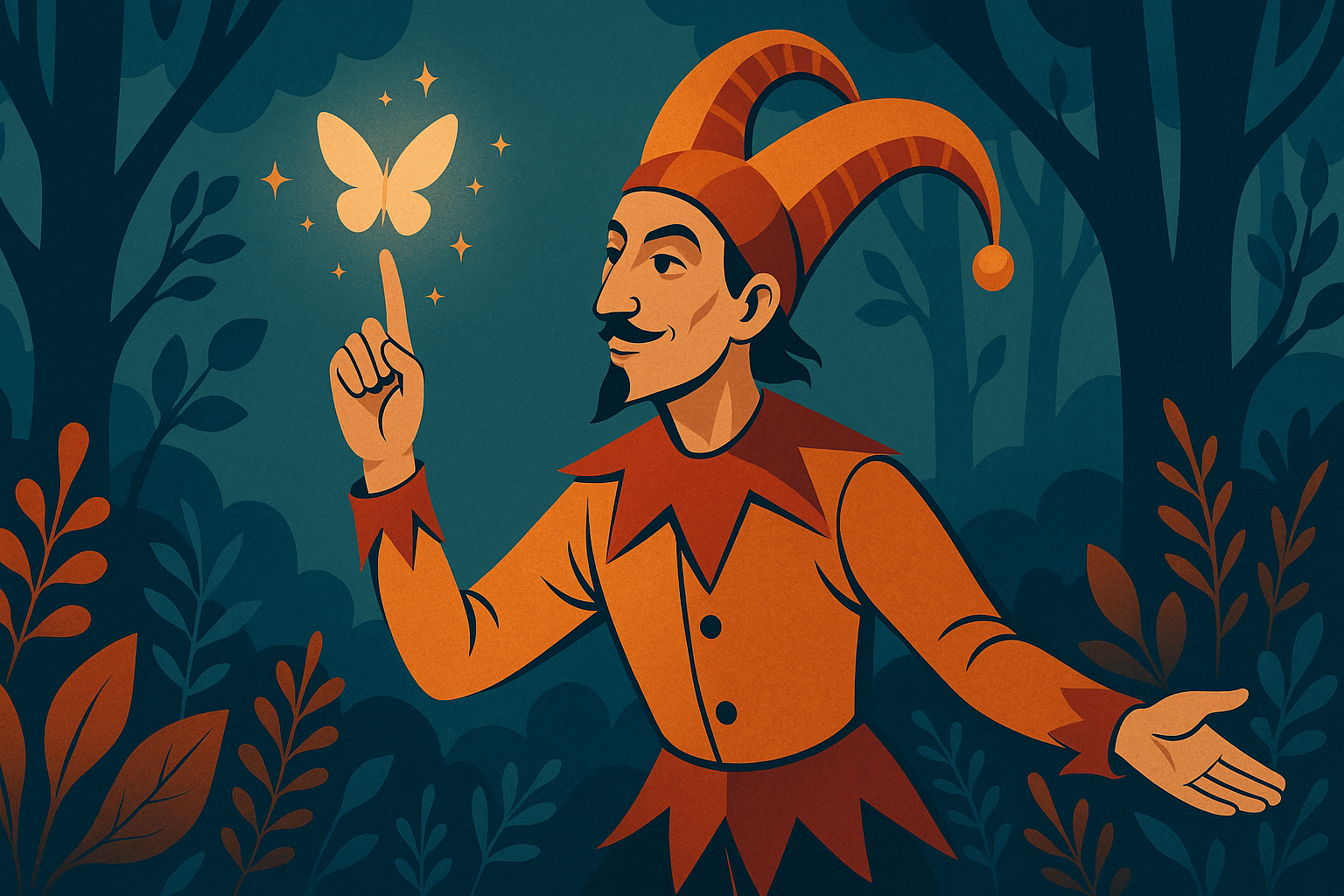
When we do so, we don’t speak in absolutes but in possibilities. It is an invitation, not a declaration. And the archetype that oversees this terrain is the trickster. Culturally, the trickster challenges norms and questions assumptions. As a personal change agent, the trickster animates the theater of medicine.

The trickster can be subtle—and benevolent. When I apply stimulation to an acupuncture point, I might tell a patient, “This point in your wrist is treating your neck pain.” In some cases, I’m simplifying—or even exaggerating—because I don’t have time to explain complex Chinese medical theory of how all the various selected acupoints are collectively involved. So I let one point carry the symbolic weight of the total therapeutic effect. Is that deceptive? Perhaps. Is it effective? Always.
But the trickster also has a shadow side. Consider the chiropractor who shows a new patient someone else’s x-ray—a spine with a dramatic lesion—allowing the patient to assume it’s their own. Convinced of the problem, the patient feels compelled to book a series of treatments. That’s a self-serving nocebo and not good medicine.
The wise practitioner guards against even subtle forms of negative reinforcement. For example, if I palpate a tight muscle in a patient’s neck, I don’t exclaim how tight it is. Inexperienced clinicians sometimes feel compelled to validate the patient’s experience by pointing out the tension—unknowingly reinforcing the very pattern they hope to relieve. If a patient asks me what I’m feeling, I can acknowledge it while softening the narrative: “Your muscle is calling for a little attention. Let’s see what we can do about that.” That’s a redirection—from a problem-centric mindset (perhaps even victim consciousness) toward solution-based empowerment.
This is the trickster at work in its most benevolent manifestation—and it’s a vital part of spiritual medicine. We are a storytelling species, shaped by myth and guided by metaphor. These are the calling cards of the spiritual world, where reality is more fluid. Sometimes it takes a little foolery to bypass our defenses and reveal our deeper truth.
Where is your inner trickster trying to guide you?